VISITA LA NOSTRA GALLERIA DI T-SHIRT DELLA SERIE STORICA
-
- Schneider Trophy
-

- Legionaria
-

- Atlantici
-
- Volo su Vienna
-
- Reparto Alta Velocità
VISIT OUR GALLERY OF HISTORICAL SERIE T-SHIRTS
ENG TEXT BELOW
SERIE STORICA: Più Veloci del Rischio ( leggi qui tutti i post )
di Igino Maria Coggi per Squadratlantica
2021 – Riproduzione vietata
Un sottufficiale che per due volte fu “il più veloce del mondo”
Francesco Agello da Casalpusterlengo
Episodio #2
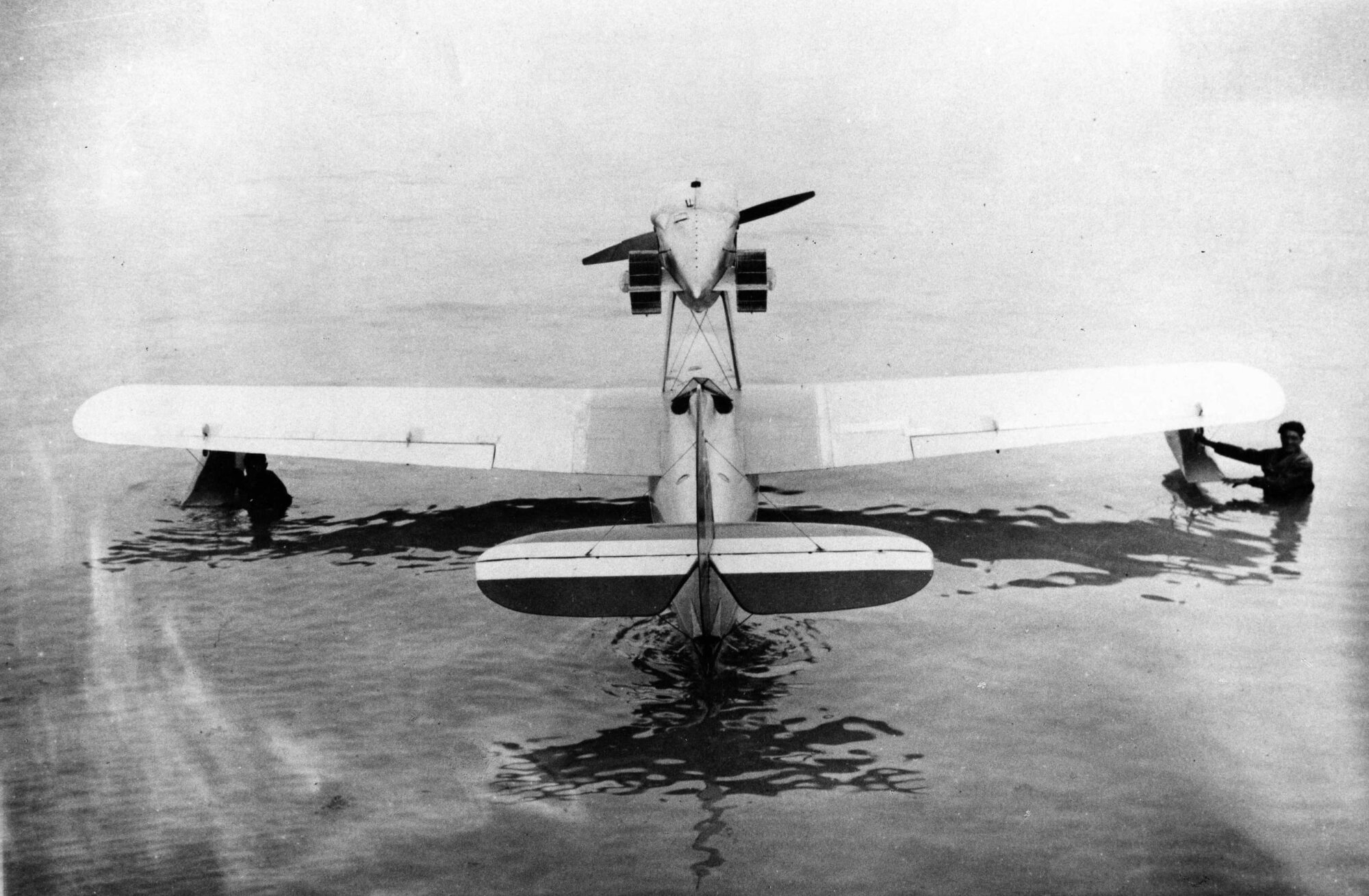
Anno 1928. Sulla sponda sud del Garda, alle porte di Desenzano, c’è un idroscalo semideserto. Realizzato durante la Grande Guerra è poi andato in quasi disarmo. L’unico e saltuario utente è Gabriele D’Annunzio al quale, per i suoi svolazzi, è stato messo a disposizione un idrovolante Savoia S.59 affidato alle cure del tenente pilota Minciotti e del motorista Malfatti. Semideserto l’idroscalo di Desenzano del Garda lo resterà ancora per poco. Perché è proprio lì che andranno ad annidarsi uomini e macchine di quel Reparto Alta Velocità che passerà alla storia con la semplice sigla di RAV. Scopo: attraverso appositi corsi formare piloti di idrovolanti da corsa per la disputa della Coppa Schneider e per tentativi di primati di velocità. Comandante del Reparto e contestualmente anche dell’Aeroporto Militare di Desenzano del Garda il tenente colonnello pilota ingegner Mario Bernasconi, piemontese di Cuneo, classe 1892, un metro e settantotto di statura, stazza non da ballerino della Scala. Che chi non ha ancora avuto la ventura di conoscerlo scoprirà subito di che pasta è fatto. Uno dei primi è il “Vate” sfrattato da Desenzano senza troppi complimenti. Che se ne stia al Vittoriale a rimuginare ricordi, a scrivere lettere “alate”, a pararsi dai creditori, a concedersi all’ammirazione di femmine estasiate, e non rompa più di tanto. Perché a Desenzano del Garda c’è da lavorare e parecchio e senza estranei fra i piedi. Bernasconi e quello che sta diventando il “suo” RAV hanno sì delle dipendenze gerarchiche e amministrative, ma il corpulento tenente colonnello piemontese se ne strainfischia. Perché sulla testa ha solo uno e uno solo cui rispondere e quell’uno si chiama Italo Balbo. E “Pizzo di ferro” e Bernasconi sono fatti per intendersi.
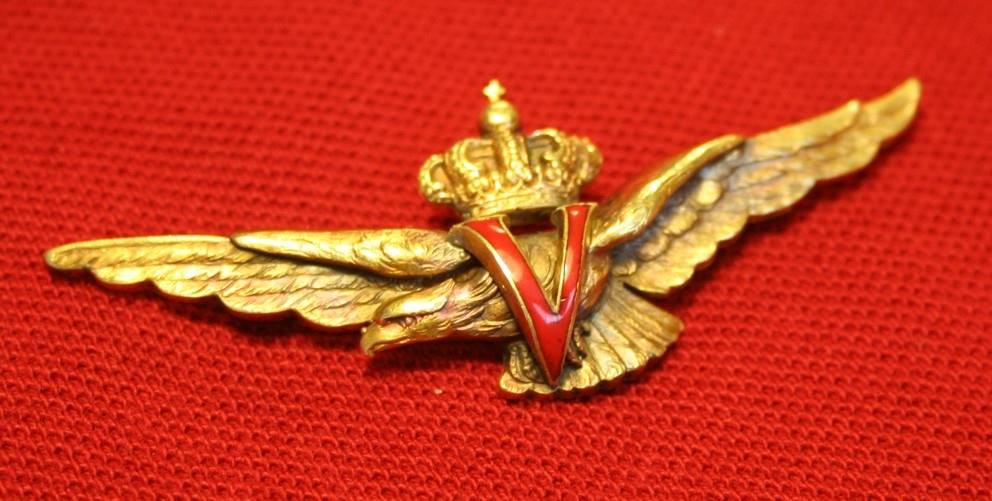
Ci vuole poco a capire che il bando di concorso per l’ammissione al RAV e ai corsi per piloti “velocisti” lo ha scritto Bernasconi di suo pugno così come ha stilato per il Reparto una regola da ordine monastico. Francesco Agello se lo procura e ci mette un attimo a leggerselo. Essere un “ricognitore” e non un “cacciatore” non ha alcuna importanza. Come requisiti base ci sta abbondantemente dentro: ventisei anni di età, quattro anni di brevetto militare, una qualifica di «ottimo pilota con 20/20». Presenta domanda, passa la prima selezione facendo probabilmente, anche se non è segnato sulle abilitazioni, il passaggio sul caccia Fiat CR.20 come da prescrizione che esige anche voli su un aeroplano “veloce”. E lascia Taliedo per le rive del Garda, c’è da giurare senza rimpianti. Qui, in quell’idroscalo che diventerà il nido dei “velocisti”, supera anche un’altra e ancor più tosta selezione. Comincia a volare sugli idrovolanti cominciando con l’S.59bis e l’M.18 passando poi sugli idrocaccia CR.20 Idro ed M.41. Ma presto mette i piedi sugli idrocorsa. Stranamente le abilitazioni agli idrovolanti da corsa non le troviamo registrate né per lui né per gli altri. Ma senz’altro avrà cominciato con il Macchi M.33, l’idro a scafo con il quale eravamo andati senza speranza alla Schneider di Baltimore del 1925, per poi passare al rosso e già più arduo Macchi M.39, quello della vittoria alla Schneider di Norfolk del 1926. Infine, il grande passo: il conseguimento del brevetto di “velocista” che dà diritto a fregiarsi di una V rossa al di sopra dell’aquila con la corona da pilota militare. Per guadagnarselo occorre volare ad oltre 500 chilometri orari sulla base misurata dei tre chilometri ai comandi del Macchi M.52 “ridotto”, l’M.52R con il quale il 30 marzo 1928, a Venezia, Mario De Bernardi aveva conquistato il primato mondiale di velocità ad una media omologata di 512,776 km/h. Agello passa anche questa prova e il Foglio d’ordini della Regia Aeronautica n. 22, 5 agosto 1929, lo autorizza a mettere sulla divisa la V rossa secondo quanto «stabilito dalla Circolare Ministeriale n. 33» pubblicata sulla Gazzetta Ufficiale, Dispensa 21 anno 1929. Anno, quel 1929, nel quale quel microcosmo che per tutti è semplicemente il RAV è impegnato allo spasimo nei collaudi in volo dei nuovi idrocorsa con i quali si vorrebbe gareggiare alla Schneider di quell’anno. Un lavoro nel quale per poco Agello non ci rimetterà la pelle.
( continua )
HISTORICAL SERIE: Faster than Risk ( read all posts here )
by Igino Maria Coggi for Squadratlantica 2021
Reproduction Prohibited
A non-commissioned officer who twice was “the fastest in the world”
Francesco Agello from Casalpusterlengo
Episode #2
Year 1928. On the southern side of Garda, near Desenzano, there is a deserted seaplane base. Built during the Great War, it was then almost disarmed. The only and occasional user is the italian poet-soldier Gabriele D’Annunzio to whom, for his flourishes, a Savoia S.59 seaplane was made available, entrusted to the care of the pilot lieutenant Minciotti and the engineer Malfatti. The Desenzano del Garda seaplane base will remain semi-deserted again just for a little while longer. Because it is exactly there that the men and machines of that “Reparto Alta Velocità” ( High Speed Squadron) that will well known in history with the simple abbreviation of RAV will nestle. Purpose: through special courses, train pilots of racing seaplanes ( hydroracers ) for the Schneider Cup and for attempts at world speed records. Commander of the Squadron and at the same time also of the Desenzano del Garda Military Airport, is the Lieutenant Colonel Pilot Engineer Mario Bernasconi, Piedmontese from Cuneo, born in 1892, one meter and seventy-eight cm high, not the size of a “La Scala danceur”. That those who have not yet had the good luck to meet him will immediately discover what he is made of. One of the first is the “Vate” ( as Gabriele d’Annunzio was called ) evicted from Desenzano without compliments. Let him stay at the Vittoriale ( d’Annunzio house in Gardone Riviera ) mulling over his memories, writing “winged” letters, shielding himself from creditors, indulging in the admiration of ecstatic females, and – please – not bother too much! Because in Desenzano del Garda there is a lot of work to do with no strangers in the way. Bernasconi and what is becoming “his” RAV do indeed have hierarchical and administrative requirements, but the burly Piedmontese lieutenant colonel doesn’t care at all. Because on his head he has one and only one to answer and that one is called Italo Balbo ( Italian Aviation Minister) . And “Pizzo di ferro” and Bernasconi are meant to be understood.
It is easy to understand that Bernasconi wrote in his own hand the announcement of competition for admission to the RAV and to the courses for “sprinters” pilots, just as he drew up monastic rules for the life in the squadron. Francesco Agello gets it and takes only a moment to read it all. Being a “scout” and not a “hunter” doesn’t matter at all. As basic requisites he is abundantly in: twenty-six years of age, four years of military license, qualification of “excellent pilot with 20/20”. He submits the application, passes the first selection, probably making, even if it is not marked on the qualifications, the habilitation on the Fiat CR.20 fighter as per the prescription which also requires flights on a “fast” airplane. And then leave Taliedo for the shores of Garda Lake, we can swear it, without regrets. Here, in that seaplane base that will become the “sprinters” nest, it also passes another and even tougher selection. It begins to fly on seaplanes starting with the Savoia Marchetti S.59bis and the Macchi M.18, then on the Fiat CR.20 “Idro” and Macchi M.41 hydro fighters. But soon he puts his feet on the hydroracers. Strangely, we do not find the qualifications for racing seaplanes registered for him or for the others. But certainly he started with the Macchi M.33, the hydro-hull with which we ( Italy ) went hopelessly to the Schneider in Baltimore in 1925, and then moved on to the red and already more difficult Macchi M.39, that of the victory at the Schneider of Norfolk in 1926. Finally, the big step: the achievement of the “sprinter” patent which gives the right to wear a red V above the eagle with the military pilot’s crown. To earn it, you need to fly at over 500 kilometers per hour on the measured basis of the three kilometers at the controls of the “reduced” Macchi M.52, the M.52R with which the pilot Mario De Bernardi conquered the world speed record on March 30, 1928, in Venice. Speed at an approved average of 512.776 km / h.
Agello also passes this test and the “Order Sheet” of the Regia Aeronautica n. 22, 5 August 1929, authorizes him to put the red V on the uniform, “in accordance with the Ministerial sheet no. 33 “published in the Official Gazette, Dispensa 21, year 1929. Year, that 1929, in which that microcosm that for everyone is simply called “RAV” is busy with the spasm in the flight tests of the new hydroracers with which it would like to compete at the Schneider Trophy of that year. A job in which Agello will almost lose his life.
(to be continued)
VISITA LA NOSTRA GALLERIA DI TSHIRT DA COLLEZIONE
-

- Spitfire K5054
-
- Piaggio Pegna PC7
-

- Reggiane Re 2005
-

- HUGHES H1
-

- Albatros DV
VISIT OUR GALLERY OF COLLECTIBLE TSHIRTS
0 Comments
Leave A Comment