
VISITA LA NOSTRA GALLERIA DI T-SHIRT DELLA SERIE STORICA
-

- Trasvolatori Atlantici
-

- Aviazione Legionaria
-

- Reparto Alta Velocità
-

- Trofeo Schneider
-

- Volo su Vienna
VISIT OUR GALLERY OF HISTORICAL SERIE T-SHIRTS
ENG TEXT BELOW
STORIA VERA | La battaglia del convoglio PQ17
Il 1943 è un anno cruciale nella battaglia dei convogli che si sta combattendo nel mar artico. Gli angloamericani devono a tutti costi rifornire di carri armati, cannoni, oli combustibili e carburanti l’unione sovietica duramente impegnata a respingere l’invasione tedesca; Kriegsmarine e Luftwaffe uniscono le loro forze per bloccare in tutti i modi questa arteria vitale di rifornimento, in gioco c’è la vittoria sul fronte orientale e di conseguenza l’esito della seconda guerra mondiale.
L’atto più drammatico della battaglia va in scena il 27 giugno del 1943 quando dal porto islandese di Hvalfjörður, fortemente scortato da unità della Royal Navy e della Marina americana, sta per salpare un convoglio di navi gigantesco. Stalin ha chiesto a Churchill di compiere uno sforzo supremo per sostenere la battaglia decisiva contro l’invasore nazista ed il PQ17, composto da 36 tra mercantili e navi cisterna con un valore del carico di oltre 700 milioni di dollari dell’epoca, è il convoglio più numeroso finora inviato sulla rotta artica, un vero e proprio azzardo da parte degli angloamericani.
A Berlino il “servizio B” ovverosia il Beobachtungsdienst, il servizio di monitoraggio tedesco, intercetta e decodifica le comunicazioni alleate che parlano della preparazione di un grosso convoglio e passa l’informazione al Comando Marina. I tedeschi fiutano il colpo del KO e cominciano a disporre le loro pedine sulla rotta artica. I “Diavoli dei Ghiacci”, i temibili U-boot di Doenitz, saranno inizialmente il faro guida per i bombardieri Ju88 e per i siluranti He111 deL SKG2 il reparto speciale addestrato a Grosseto da istruttori italiani, poi si prenderanno cura delle navi sfuggite alla caccia della Luftwaffe. Contemporaneamente scatta l’operazione Rösselsprung “Salto del cavallo” nella quale la flotta pesante di Reader, guidata dalla formidabile Tirpitz, nave gemella della Bismark che con i suoi grossi calibri da 380 può fare strage delle navi mercantili alleate, salpa dai porti norvegesi per concentrarsi in un unico devastante attacco al convoglio PQ17.
La battaglia sta per iniziare.
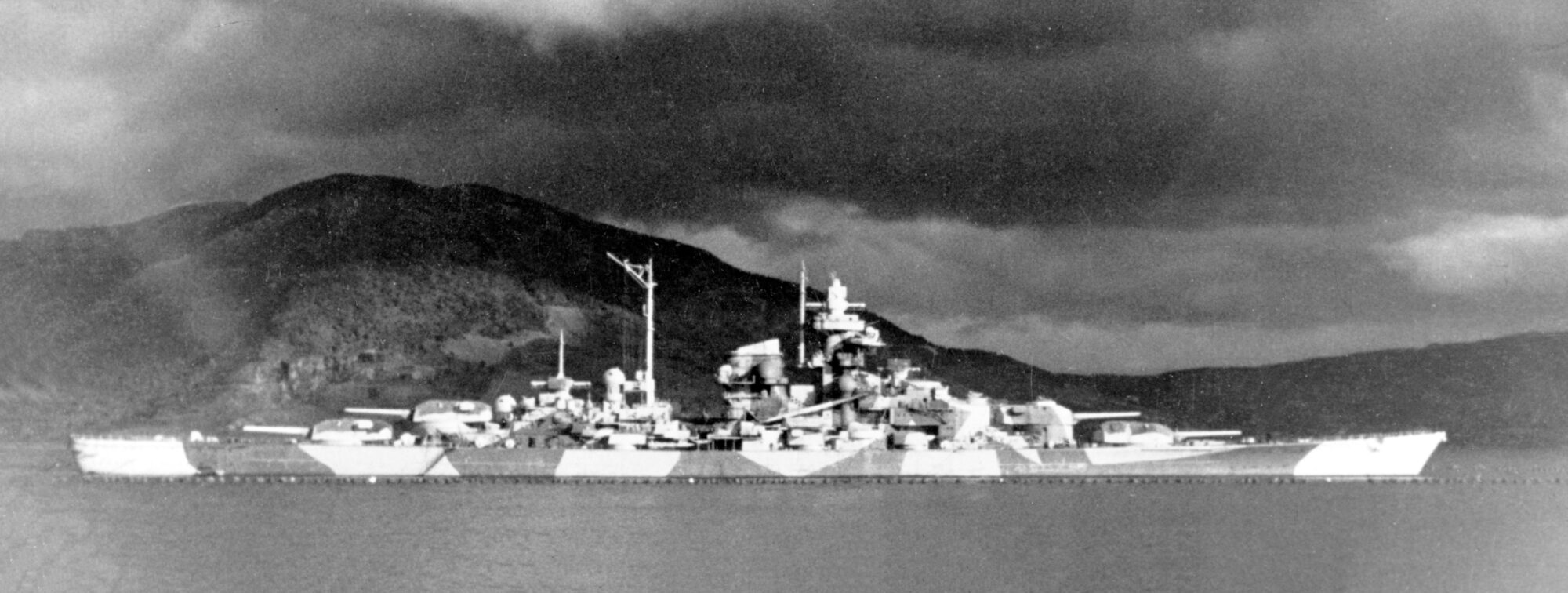
Tirpitz
ENG TEXT
REAL HISTORY | The Convoys Artic Battle
1943 is a crucial year in the battle of convoys fought in the Arctic Sea. The Anglo-Americans must at all costs supply tanks, cannons and fuels to the Soviet Union, which is hard pressed to repel the German invasion; Kriegsmarine and Luftwaffe join their forces to block in every way this vital supply artery, on the game table there is the victory on the Eastern Front and consequently the outcome of World War II.
The most dramatic act of the battle was staged on June 27, 1943, when from the Icelandic port of Hvalfjörður, heavily escorted by units of the Royal Navy and the US Navy, a gigantic convoy of ships was about to set sail. Stalin asked Churchill to make a supreme effort to support the decisive battle against the Nazi invader and PQ17, consisting of 36 merchant and tankers with a cargo value of over $700 million at the time, is the most numerous convoy so far sent on the Arctic route, a real gamble by the Anglo-Americans.
In Berlin, the “B service” the Beobachtungsdienst, german monitoring service, intercepts and decodes the allied communications that talk about the preparation of a large convoy and passes the information to the Navy Command. The Germans smell the knockout and begin to place their pawns on the Arctic route. The “Devils of the Ices”, the fearsome U-boot of Doenitz, will be initially the lighthouse guide for the bombers Ju88 and the torpedos He111 of the SKG2, the special department trained in Grosseto from Italian instructors, then they will take care of the ships escaped from Luftwaffe’s chase. At the same time, Operation Rösselsprung “Horse Jump” takes place with the heavy fleet of Admiral Reader, led by the formidable Tirpitz, sister ship of Bismark that with its large calibres of 380 cm can slaughter the allied merchant ships, sets sail from Norwegian ports to focus on a single devastating attack on convoy PQ17.
The battle is about to begin.
VISITA LA NOSTRA GALLERIA DI TSHIRT DA COLLEZIONE
-

- Spitfire K5054
-
- Piaggio Pegna PC7
-

- Reggiane Re 2005
-

- HUGHES H1
-

- Albatros DV
VISIT OUR GALLERY OF COLLECTIBLE TSHIRTS
0 Comments
Leave A Comment